
Monday, 24 August 2026
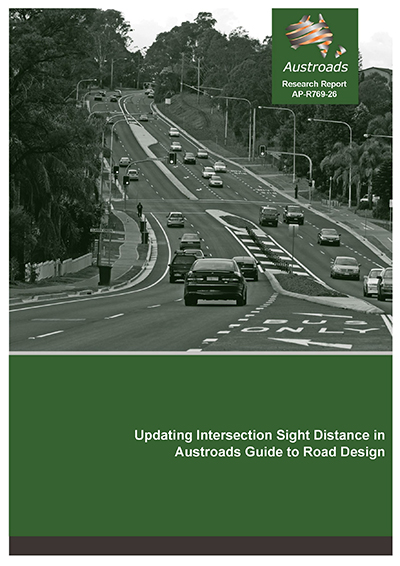
As transport networks become more complex and road users travel in different ways, road designers are being encouraged to take a fresh look at how visibility is assessed at intersections, with Austroads identifying opportunities to update guidance in response to evolving vehicles, transport technology and travel patterns across the road network.
Intersections are no longer designed solely around cars. Buses, cyclists and a wider mix of road users now interact in increasingly complex environments, yet many of the methodologies used to determine sight distance were developed primarily with motor vehicles in mind.
“Many of the principles that underpin intersection sight distance remain sound, but transport networks have evolved considerably. This work asks whether our guidance is keeping pace with the environments designers are working in today and the road users they are designing for,” said Michael Nieuwesteeg, Austroads’ Road Safety and Design Program Manager.
Austroads has examined how guidance can better reflect today’s transport network while remaining practical for designers.
The review found that practitioners currently draw on several sight distance models, each intended for different situations. While these models remain important design tools, feedback from industry highlighted the need for clearer guidance on when and how they should be applied. The research also identified opportunities to improve guidance for signalised intersections, including situations where traffic signals are not operating normally.
“Our aim was to challenge assumptions that have been embedded in road design practice for many years and give practitioners greater clarity to help them navigate increasingly complex designs,” said Michael.
A key theme emerging from the research was the importance of recognising a broader range of road users in visibility assessments. Historically, cars have been the primary focus of sight distance models, whereas contemporary transport networks require designers to consider how cyclists, public transport and other users interact within the same space.
“Good intersection design depends on more than applying a formula. Designers need to understand which assessment approach is appropriate, what assumptions sit behind it and how it relates to the people using the intersection. Providing that clarity is one of the most important outcomes of this work.”
The recommendations will inform future updates to the Austroads Guide to Road Design Part 4A: Unsignalised and Signalised Intersections. They will include clearer treatment of sight distance models, improved guidance on signal failure scenarios and stronger alignment with related technical standards.
Download Updating Intersection Sight Distance in Austroads Guide to Road Design
WEBINAR TODAY
Monday, 24 August 2026, 1 pm AEST. Presented by Joanna Davies, Sivan Sivanathan and Andrew Baker.
No charge but registration is essential. Can't make the live session? Register and we'll send you a link to the recording.