
Monday, 22 September 2025
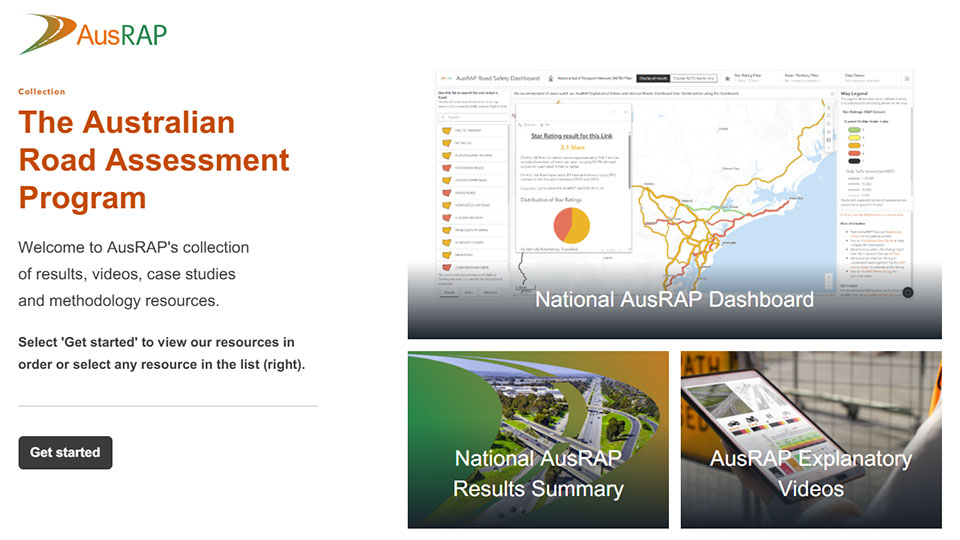
Austroads, the association of Australasian road transport and traffic agencies, has released safety star ratings for Australia’s major arterial roads – the roads that carry the majority of traffic – in a landmark step towards making our roads safer. The new National AusRAP Dashboard gives a clear, interactive view of road safety to prioritise life‑saving upgrades.
These star ratings are part of the Australian Road Assessment Program (AusRAP), a nationally coordinated effort to identify which roads pose the highest risks of death and serious injury, and where road upgrades will have the greatest life-saving impact.
“We know not all roads are equal when it comes to risk,” said Geoff Allan, Austroads Chief Executive. “That’s why the focus of AusRAP is on the country’s most travelled roads – the highways and major arterial routes where millions of Australians drive every day, and where fatal and serious injury crashes are most likely to occur.”
“By publishing star ratings and crash history data on a single, national dashboard, we’re giving governments and the community a clear line of sight to where upgrades will have the greatest impact,” said Allan.
Australia has a vast road network, and while many regional and local roads also need safety improvements, this phase of AusRAP is intentionally focused on the busiest corridors – where the risk is highest because of the sheer volume of traffic and higher travelling speeds. This targeted approach, used together with or alongside other tools, assists governments to prioritise investments where they will save the most lives, the soonest. Future phases will expand coverage as new assessments and data become available.
“Road safety star ratings are a robust and trusted tool for communicating road safety information to the public, and Austroads is proud to coordinate and publish our members’ results. Importantly, these results provide a snapshot in time of the safety of our roads – and there is still much work to be done to reach our goal of having 80% of all travel occur on roads rated 3 stars or better by 2030,” added Geoff Allan.
Australia’s national AusRAP results are published through the interactive National AusRAP Dashboard, an evidence‑based tool that shows AusRAP Star Ratings, crash history metrics and traffic volumes, enabling transparent, accountable and evidence-based investment decisions.
What do the star ratings mean?
AusRAP star ratings assess how safe a road is, from 1-star (least safe) to 5-star (most safe). They reflect the level of safety “built into” the road, considering factors like road layout, speed limits, and traffic volumes – not driver behaviour. It uses the globally recognised iRAP methodology. Each additional star halves the risk of death or serious injury. Roads rated 3‑stars and above are recognised as safer roads.
Alongside the star ratings, the dashboard presents crash risk using at least five years of data:
- Crash Density – the number of serious crashes per kilometre of road per year, and
- Crash Rate – serious crashes per 100 million vehicle kilometres travelled (VKT), indicating risk relative to how much a road is used. Traffic volumes (VKT) are also shown to help prioritise upgrades where the most trauma can be prevented.
When used together, star ratings and crash history results help decision-makers plan safety upgrades based on both the design of the road and how it performs in real life.
What’s the goal?
These star ratings support the national road safety target that by 2030, at least 80% of travel occurs on 3-star roads or better. This is part of Australia’s broader commitment to Vision Zero – the goal of zero deaths and serious injuries on our roads by 2050.
The ratings are available through an interactive online dashboard, part of the AusRAP Collection. This collection brings together key information about AusRAP, including how the program and dashboard work, as well as case studies from across the country showing how AusRAP data has already supported safer road upgrades in several states and territories.
What about other roads?
AusRAP currently focuses on safety for vehicle occupants on major roads. Work is underway to map the crash history results and to expand the star ratings to also cover pedestrians, cyclists, and motorcyclists, and member agencies are exploring ways to extend coverage to additional parts of the road network in future phases.
“We understand people may ask, ‘Why not rate every road?’ and the answer is: we’re starting with where we can have the greatest impact, to save the most lives soonest. The roads that carry the most people are where the greatest risks – and greatest opportunities – lie,” said Geoff Allan.
Background
The Australian Automobile Association (AAA) introduced AusRAP in 2001. Austroads took over national leadership in 2021, coordinating assessments across state and territory road agencies.
Star ratings are based on the internationally recognised iRAP methodology, used in over 130 countries.
The dashboard can be accessed at here. Download the AusRAP Summary Report.
Learn more about AusRAP at www.austroads.info/ausrap.
Attributable quotes from AusRAP members
NSW The Hon Jenny Aitchison, NSW Minister for Roads and Minister for Regional Transport:
“I welcome today’s release by Austroads of the AusRAP national dashboard. You cannot fix what you do not measure. AusRAP gives us a powerful national tool to improve road safety. The Minns Labor Government has proudly played a leading role in this initiative and will use AusRAP to guide road safety investment decisions that are data and evidence based.”
“NSW is committed to doing everything it can to reduce the number of crashes on our roads. Every fatality and injury is a tragedy. We have already released to the public and stakeholders NSW’s safety star rating data, a move towards transparency that has been widely welcomed.”
WA Rita Saffioti, Deputy Premier, Treasurer, Minister for Transport; Sport and Recreation:
“WA is pleased to be part of this national initiative as it is one that supports both increased road safety as well as a consistent evidence-based approach to identifying and prioritising high risk roads.”
“It is encouraging to see that currently 82% of vehicle travel on the WA state network is on 3-star standard, or better, roads. We are committed to continuing to maintain and improve our state network to provide safer travel for all road users.”
ACT Benjamin Hubbard, Senior Director, Road and Path Operations, Roads ACT:
“Delivering safe roads and infrastructure is a significant priority for the ACT Government and a key focus of our current ACT Road Safety Action Plan. The release of the National AusRAP dashboard helps support the ACT Government’s evidence-based approach to road safety and investment in achieving the Vision Zero.”
Attributable quotes from AusRAP partners
Australasian College of Road Safety Dr Ingrid Johnston, Chief Executive:
ACRS values AusRAP’s role in sharing road safety information, both locally and globally. By proactively measuring the safety of our roads, AusRAP facilitates a collaborative effort to improve road safety outcomes, before predictable and preventable crashes occur. ACRS recognises these results will help inform and guide improvements in safety for vehicle occupants, but more needs to be done to identify risks and develop treatments that will make roads safer for our vulnerable road users. Pedestrians, cyclists and motorcyclists all deserve to be safe on our roads and AusRAP needs to be part of that solution.
International Road Assessment Programme (iRAP) Greg Smith, Chief Executive:
The International Road Assessment Program (iRAP) commends the members of AusRAP for publishing their results for Australia’s arterial roads. There are only five years left to achieve Australia’s National Road Safety Strategy target of ensuring that at least 80% of travel occurs on roads with a 3-star rating or higher by 2030. While these AusRAP results can help inform and guide the priority of work needed to achieve this ambitious objective, there is no time to lose.
National Transport Research Organisation (NTRO) Dr Richard Yeo, Chief Operating Officer:
As iRAP’s Centre of Excellence in Australia and founding contributor to the evidence-based research that underpins AusRAP, the NTRO is very proud to have provided major support to the understanding by our member transport agencies of road safety risk across the nation’s road networks. The public release of Star Ratings is vital in the engagement of the community in saving lives through the development of safer road infrastructure for all road users.