
Monday, 26 May 2025
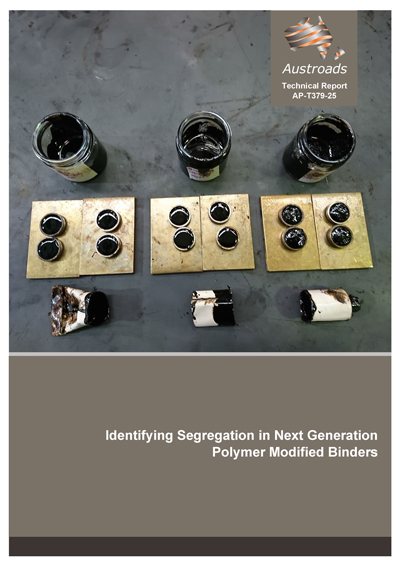
Austroads has released a technical report outlining a new segregation test method designed to evaluate the storage stability of modern polymer modified binders (PMBs), including the increasingly common next generation hybrid variants.
This new method is formalised as Austroads Test Method ATM 104 Storage Stability of Binders, representing a significant improvement in assessing PMB segregation during hot storage and transport.
Segregation tests in the Australian specification ATS 3110 ensure the polymer in PMBs remains evenly dispersed during storage and transport. If segregation occurs, parts of the binder may have uneven polymer content, causing inconsistent performance in sprayed seals or asphalt, potentially compromising road quality.
Previously, Austroads Test Method ATM 108 was used, but it was developed for traditional PMBs containing a single polymer type and is not suited for next generation hybrid PMBs used in Australia and New Zealand. These new binders, containing multiple polymers, require more sophisticated testing.
Ross Guppy, Austroads Transport Infrastructure Program Manager, said: “The development of hybrid polymer modified binders has outpaced existing test methods. ATM 104 is a robust, modern test that effectively assesses both traditional and next generation PMBs.”
Austroads conducted a comprehensive review of seven international segregation tests from Europe, South Africa, the USA, and Canada. None could be directly adopted, so a modified version of the European EN 13399 test was selected for its wide use, reduced binder oxidation, and improved health and safety compared to ATM 108.
“Choosing EN 13399 as the basis for ATM 104 was a strategic decision aligning with international best practice while meeting local needs,” said Ross.
Laboratory studies compared ATM 104 with ATM 108 and the original European test across single-polymer and hybrid PMBs. ATM 104 showed greater sensitivity in detecting segregation for both binder types.
Ross highlighted that ATM 104 is a future-ready solution, offering enhanced sensitivity, safety, and applicability, while supporting innovation and maintaining high performance standards.
The report also reviews international segregation test limits, helping Australian and New Zealand jurisdictions align with global standards.
“This reflects Austroads’ commitment to technical excellence and leadership, ensuring high-performing materials are reliably tested with evidence-based methods,” concluded Ross.
Download Identifying Segregation in Next Generation Polymer Modified Binders and ATM 104 Storage Stability of Binders.