
Friday, 4 September 2026
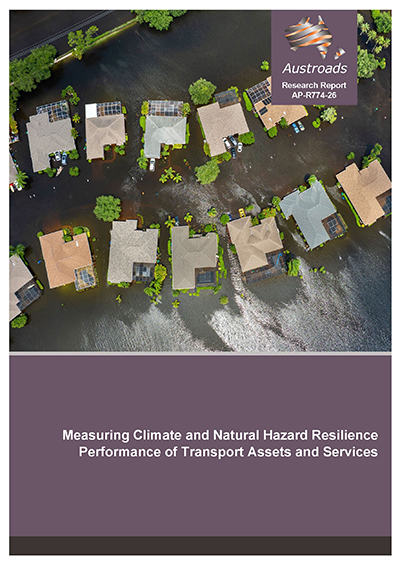
How quickly can essential transport services recover after a flood, bushfire or other natural hazard? Are disruptions becoming shorter or more severe? Do critical routes have viable alternatives? New Austroads guidance gives transport agencies a structured way to answer these questions by measuring how assets, services and networks perform before, during and after disruption. It supports agencies to establish baselines, track changes over time and use the results to inform planning, investment and reporting.
Measuring resilience is complex. Risk assessments can identify where transport infrastructure may be exposed or vulnerable, but they do not necessarily show how well the transport system maintains services, adapts during an event or recovers afterwards.
The new framework distinguishes between three related areas: observed resilience performance, climate and natural hazard risk, and the organisational capability that enables effective preparation and response. Its primary focus is on measuring actual performance, including service disruption, continuity of access, operational adaptation and recovery.
Austroads Environment and Sustainability Program Manager Joanne Vanselow said consistent measurement was essential for understanding whether resilience was improving.
“Agencies need evidence that shows not only where risks exist, but how transport assets and services perform when disruption occurs.
“Tracking factors such as road closures, recovery times, service continuity and the availability of alternative routes can reveal where resilience is strengthening and where further action may be required.”
The guidance sets out a six-step process for defining the purpose and scope of measurement, selecting appropriate metrics, assessing performance and applying the findings. It is accompanied by a register of potential metrics covering resilience performance, risk and organisational resilience.
The process is flexible rather than prescriptive. Agencies can select metrics that reflect their objectives, operating context, available data and organisational capability. Where detailed information is limited, existing operational and asset data or qualitative measures can provide a practical starting point.
The guidance also explains how agencies can interpret their results using targets, thresholds, trend analysis and assessment rubrics. Combining leading indicators, which identify emerging vulnerabilities, with lagging indicators showing what occurred during or after an event can provide a more complete view of resilience.
“Measuring resilience should lead to action,” Joanne said. “The results can help agencies identify vulnerabilities, review existing approaches and direct further analysis or investment towards the areas where it is most needed. The process can also be refined as data and organisational capability improve.”
The framework can support asset management, adaptation planning, investment prioritisation and climate-related reporting. It does not prescribe universal metrics or performance thresholds, recognising that resilience priorities and operating conditions differ between organisations and jurisdictions.
Download: Measuring Climate and Natural Hazard Resilience Performance of Transport Assets and Services
Join the webinar
Monday, 12 October 2026 at 1:00 PM AEDT | Presented by Kieran Power, Shannon Regan and Aidan McGann. The session includes live Q&A.
No charge but registration is essential. Can't make the live session? Register and we'll send you a link to the recording.