
Thursday, 26 February 2026
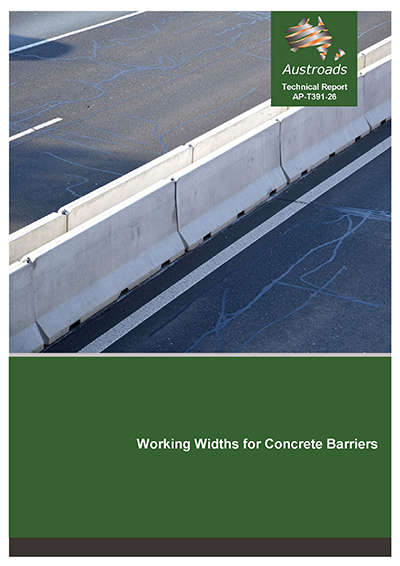
Austroads has released new research that updates recommended working widths for concrete road safety barriers, providing clearer guidance to support safer roadside and infrastructure design across Australia and New Zealand.
Working width refers to the space required behind a barrier to accommodate the movement of a vehicle or barrier system during and after an impact. Getting this dimension right is critical to preventing secondary collisions with roadside hazards, particularly where heavy vehicles are involved.
While existing working width values used by road agencies were found to be generally consistent across jurisdictions, the research re‑evaluates these values using evidence from international crash tests and computer simulations that examine how far vehicles move behind concrete barriers during a crash.
The study draws on zone of intrusion data developed under the Manual for Assessing Safety Hardware (MASH) testing framework, which reflects how vehicles interact with rigid barriers under modern impact conditions.
“Concrete barriers are often installed in highly constrained environments such as bridges, tunnels and high-speed corridors, where there is limited tolerance for error,” said Michael Nieuwesteeg, Austroads Road Safety & Design Program Manager.
“This work gives agencies and designers a more robust technical basis for determining how much space is required behind a barrier to manage heavy vehicle impacts safely.”
The research establishes revised recommended working widths for test levels TL‑3, TL‑4 and TL‑5 concrete barriers, with values varying according to barrier height and containment level.
The recommendations account for the behaviour of heavy vehicles during impacts and include adjustments to reflect Australia’s maximum legal vehicle height.
The report also discusses the implications of working width selection in tunnels and lower speed environments, where vehicle behaviour and impact conditions differ from open road settings. While working widths may be influenced by these conditions, the research reinforces the importance of understanding the underlying principles of vehicle intrusion and barrier performance when applying the guidance.
The findings and recommendations from this research will inform future updates to the Austroads Guide to Road Design Part 6. An Austroads Safety Barrier Assessment Panel technical advice has also been developed to support early adoption of the guidance by road agencies.
Download Working Widths for Concrete Barriers.