
Friday, 12 September 2025
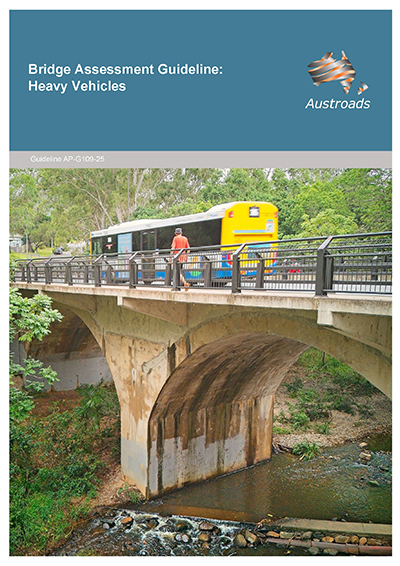
A new engineering framework aims to help practitioners make sound, risk-informed decisions when assessing bridges for heavy vehicle access. Focused on real-world bridge performance, the new Austroads guideline supports road agencies and assessors in addressing discrepancies between conventional assessment results and in-service behaviour, providing a richer basis for managing uncertainty and supporting evidence-based judgment and decision making.
Australia and New Zealand rely heavily on road transport for economic productivity and community connectivity. Many bridges, especially those built for older vehicle loads, continue to govern heavy vehicle access today. Strengthening or replacing them is often not viable financially, so greater flexibility is essential.
“Bridges that do not meet the current design codes may still safely carry heavy vehicles if assessed with a comprehensive, risk-based approach,” said Ross Guppy, Austroads’ Transport Infrastructure Program Manager. “This guideline helps road agencies balance risk with productivity by distinguishing between structural assessment and access management, enabling more tailored and effective decisions.”
Where traditional assessments indicate unsatisfactory results despite field evidence to the contrary, the guideline offers bridge-specific advice grounded in the plausibility check prescribed by ISO 13822:2010, to support more realistic and technically robust assessments.
By considering updated material properties, improved structural analysis techniques, and field evidence, the guideline enables a more nuanced understanding of bridge reliability and structural performance, particularly for bridges showing no signs of damage, distress, or deterioration.
“This is not a guide on how to undertake bridge assessments for heavy vehicles in accordance with AS 5100 or the New Zealand Bridge manual,” said Ross. “It is a way to better understand and manage the uncertainties involved, and to support decisions that reflect the actual condition and behaviour of our bridge assets; particularly for bridges that do not meet the requirements of AS 5100 or the New Zealand Bridge manual.”
The guideline provides targeted advice and practical techniques to effectively manage heavy vehicle access to support transport productivity while addressing risk.
The framework promotes clearer documentation of assumptions, data sources, and decision rationale, enhancing transparency and facilitating communication with non-engineering stakeholders such as regulators, funding bodies, and road users.
By encouraging continuous updating of information and explicitly managing uncertainty, the guideline helps road agencies make defensible, consistent, and optimised decisions that balance risk, productivity, and infrastructure longevity.
Download the Bridge Assessment Guideline: Heavy Vehicles.
Join the webinar
Thursday 23 October 2025 at 1:00 PM AEDT | Presented by Robert Heywood, Peter Shaw and Barry Wright.
No charge but registration is essential. Can't make the live session? Register and we'll send you a link to the recording.