
Monday, 29 June 2026
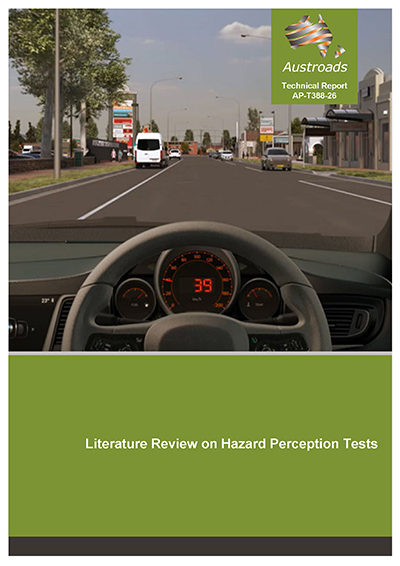
Austroads’ literature review of hazard perception tests identifies what makes these tests effective, with a particular focus on novice drivers. It shows that the ability to anticipate and respond to hazards is a critical skill linked to safer driving and reduced crash risk.
“Hazard perception is one of the most important higher-order driving skills. This research shows that when drivers are better at identifying and responding to risks, they are more likely to drive safely,” said Austroads Road Safety and Design Program Manager Michael Nieuwesteeg.
Hazard perception is defined as the ability to read the road, identify developing risks and respond appropriately. Drawing on Australian and international research, the review shows that inexperienced drivers and those involved in crashes tend to have poorer hazard perception skills, reinforcing the importance of assessing and developing these capabilities early in the licensing process.
The review also finds that performance on hazard perception tests is associated with safety outcomes. Drivers who require multiple attempts to pass are more likely to be involved in crashes than those who pass on their first attempt, suggesting the tests can help identify drivers who may need further support.
“The review provides clear evidence that hazard perception testing can help ensure a minimum safety standard for new drivers, while also highlighting where further research and improvements can strengthen its impact,” said Michael Nieuwesteeg.
The research examines how different testing approaches perform in practice, including reaction-time-based and hazard prediction methods. Both are valid ways of assessing hazard perception, although hazard prediction may provide deeper insights by requiring drivers to anticipate how a situation will unfold rather than simply react.
The role of modern testing formats is also highlighted, including video-based and computer-generated scenarios that enable a wide range of real-world hazards to be assessed. These approaches offer flexibility and scalability for licensing authorities while maintaining close alignment with real driving environments.
Michael Nieuwesteeg said the findings provide valuable guidance for agencies and practitioners looking to refine licensing processes and improve road safety outcomes.
“Incorporating these tests into licensing schemes would encourage learners and instructors to focus more on hazard detection and road scanning during training, helping to build safer driving behaviours from the outset.”
While the review confirms the value of hazard perception testing, it also identifies areas for further investigation. These include its potential role in assessing fitness to drive, supporting older drivers, and better understanding the relationship between test performance and real-world safety outcomes.