
Monday, 12 April 2021
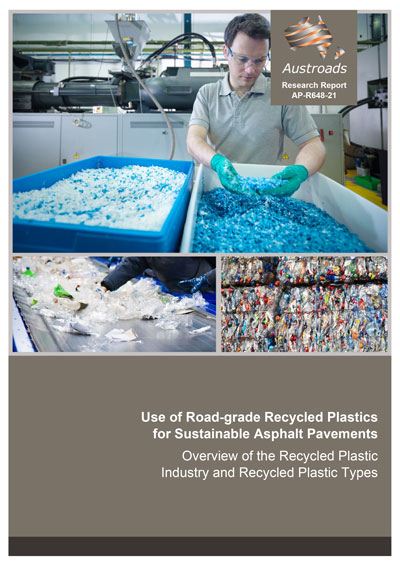
Austroads has published a comprehensive overview of the type, volume, and price of recycled plastics and their possible uses in asphalt.
Plastic is a significant contributor to Australia and New Zealand’s waste generation. With plastic consumption increasing significantly around the world, there is a growing interest in exploring the viability of using recycled plastics in road construction.
The report examines recycling processes, the price of recycled plastics, annual production volumes and infrastructure capabilities.
Ross Guppy, Austroads Transport Infrastructure Program Manager, says the content was informed by interviews with members of the plastics industry including associations, councils, material recovery facilities, plastic recyclers, and manufacturers.
“This is the first report from a project which is examining the use of road-grade recycled plastics in asphalt pavements.”
“The project is investigating the most suitable types of plastics and will develop new tests and methods to ascertain if their addition into asphalt could produce detrimental effects for the environment, the health and safety of the workers, or impact the future recyclability of plastic-modified asphalt,” Ross said.
Transport agencies with the construction industry, have a long history of incorporating recycled materials into road infrastructure. Austroads Guide to Pavement Technology Part 4E: Recycled Materials outlines how concrete, bricks masonry rubble and, fly ash, and rubber can be successfully incorporated in road infrastructure.
In addition, Austroads is undertaking work that will provide certainty to road managers about the use of more and new waste materials into roads and transport infrastructure. This work aligns with the National Plastics Plan and CSIRO’s Circular economy roadmap for plastics, glass, paper and tyres.
Austroads current work includes:
- Use of road-grade recycled plastics for sustainable asphalt pavement (APT6305) will provide guidance and clear information to the road industry regarding best practices for identifying, handling and using ‘road-grade’ plastics in asphalt. The guidance will help industry identify the most suitable type of plastic to be used, the specifications that should apply and ways to assess potential issues, such as the generation of microplastics, fumes and emissions. This project is fully funded by the Commonwealth Government.
- Protocol for the assessment of waste materials in road surfacing (APT6249) will develop a scientific process for quantifying the effect of using novel, community waste or recycled materials in asphalt pavements and sprayed seal surfacings. This will provide a consistent process agreed by Austroads members on how to assess the performance characteristics as well as the potential environmental and health effects of various recycled material.
- Use of crushed glass in road infrastructure (APT6311) will produce guidelines and technical specifications on the use of crushed glass in road infrastructure as a bedding sand replacement, and in concrete, drainage, embankment fill and landscaping. This project is fully funded by the Commonwealth Government.
- National specification for crumb rubber binders in asphalt and seals (APT6173) will harmonise the testing and specification of crumb rubber binders in Australia. This project is being undertaken in partnership with Tyre Stewardship Australia.
Download the report: Use of Road-grade Recycled Plastics for Sustainable Asphalt Pavements: Overview of the Recycled Plastic Industry and Recycled Plastic Types