
Friday, 24 July 2026
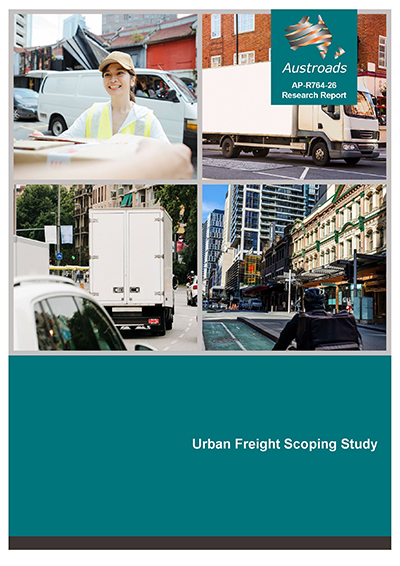
Efficient urban freight keeps cities productive, but road managers and transport agencies face increasing pressure to balance freight needs with community expectations and competing demands for urban space. A new Austroads study highlights the need for clearer definitions, better data, and practical tools to help decision makers better understand and respond to urban freight pressures.
Urban freight refers to the system and process by which goods are collected, transported and distributed within urban centres. For this study, freight which is passing through the urban centre without stopping is excluded. Urban freight covers many of the everyday movements that support businesses, households, construction, retail, services and e-commerce.
The study found that urban freight demand is increasing in scale and complexity across Australia and New Zealand. Common challenges include limited loading zones and kerbside space, vehicle access constraints in higher-density areas, congestion affecting delivery reliability, restrictions on off-peak deliveries, labour shortages, safety concerns for delivery workers and barriers to electric vehicle uptake.
The report presents a possible Urban Freight Evaluation Framework to help agencies focus their data collection on specific freight questions and decisions.
Austroads Program Manager Transport Network Operations Amy Naulls said efficient freight movement is essential to cities but not always fully understood in planning and policy decisions.
“Urban freight is a critical system which we depend on every day to get goods to businesses, homes, construction sites and local services. However, despite its importance, it is not always fully understood in the data and planning processes that shape our urban transport networks.
This study gives government agencies a practical evidence base to better understand the freight task, identify pressure points, and consider where further investigation, trials or targeted action may be warranted.”
The Urban Freight Evaluation framework will help policymakers collect and use data to measure and evaluate urban freight activity. The study identifies five aspects of urban freight to help policy makers frame the right questions and collect targeted evidence:
- Demand: the scale and location of urban freight activities
- Productivity: including efficiency, reliability and use of technology
- Network performance: capacity, travel times and resilience
- Land use capacity: availability of industrial land, loading docks, and kerbside space
- External impacts: congestion, emissions, safety and amenity
Amy said the framework helps agencies focus on the evidence needed for specific urban freight decisions.
“The value of the framework is that it helps agencies focus on the information needed to answer specific questions, understand local freight issues and evaluate possible responses,” she said.
The report identifies three opportunity areas for further consideration: improving awareness of urban freight needs, investigating targeted trials and interventions, and using forums to support problem-specific data sharing between government and industry.
Download Urban Freight Scoping Study
Join the webinar
Wednesday, 26 August 2026 at 1:00 PM AEST | Presented by Phil Bullock, Lachlan Benson and Evelyn Bratchford. The session includes live Q&A.
No charge but registration is essential. Can't make the live session? Register and we'll send you a link to the recording.