
Road Safety
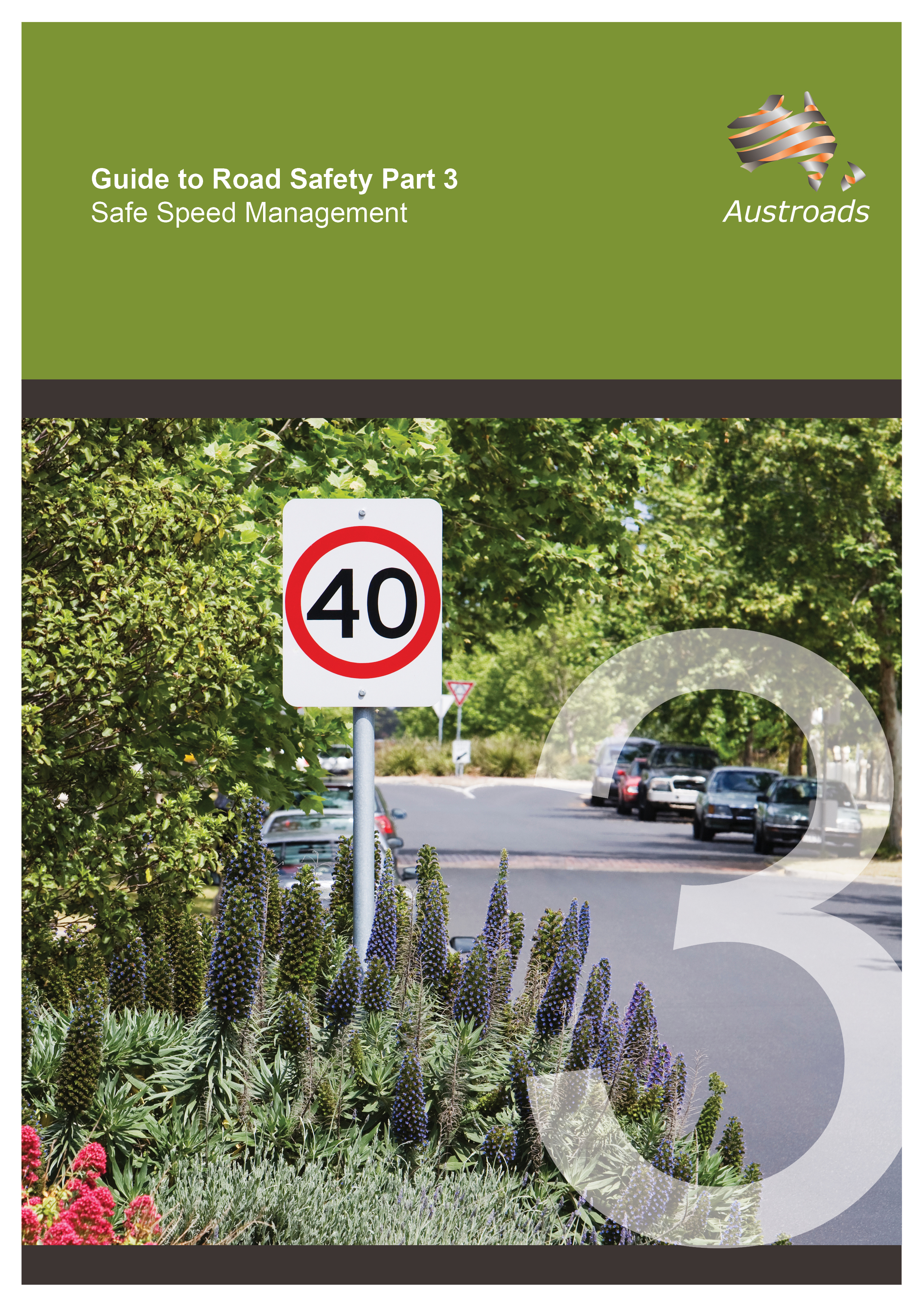
- Publication no: AGRS03-26
- ISBN: 978-1-923617-53-7
- Published: 17 June 2026
- Edition: 3.0
- PDF (free) Download
Speed is at the core of a safe road system as it influences whether a collision occurs – and if it does, the degree of injury that results. Managing speed is therefore crucial to achieving a Safe System.
The Guide to Road Safety Part 3: Safe Speed Management explains how vehicle speed affects crash risk and injury severity. It introduces ‘safe speeds’ to describe the speed at which serious harm to road users is minimised. The broader benefits of safe speeds for individuals and society are also highlighted.
Safe speeds are achieved through the combined use of speed limits, road design, road safety infrastructure, enforcement and vehicle technologies. Guidance on planning for safe speeds is provided, focusing on a proactive and strategic approach to implementing safe speeds, supported with effective communications and engagement.
A framework for establishing safe speed limits is provided, supported by best practice guiding principles. The framework uses the Movement and Place approach to identifying street environments from which the appropriate safe speed limit is selected, considering modifying factors that increase or mitigate risk. Approaches to implementing safe speed limits are also discussed.
This Part of the Austroads Guide to Road Safety is intended for road authorities and practitioners that are interested in how vehicle speeds can be managed to reduce harm in the road transport system, including through speed limit setting processes and approaches.
Austroads report AP-T385-25 presents the findings of a literature review and engagement with stakeholders to identify and address key gaps in the Guide to Road Safety Part 3: Safe Speeds.
Webinar
Watch a recording of the webinar to learn more.
Edition 3.0 includes:
- a revised Section 2, introducing the concept of ‘safe speeds’ for different crash configurations
- a revised Section 3, with a focus on the impacts of safe speeds across a range of safety, health, environmental, social and economic outcomes
- updated guidance on safe speed management (Section 4), planning (Section 5) and implementation (Section 7), to align with international best practice
- introduction to key existing safe speed frameworks and principles(Section 6)
- guidance on speed data collection, monitoring and evaluation(Section 8)
- examples of street environments and descriptions developed for speed limit setting in Australia and New Zealand (Appendix E)
Superseded editions:
Edition 2.1 published February 2026
Edition 2.0 published November 2025
Edition 1.1 published July 2024
Edition 1.0 published July 2021
- 1. Introduction
- 1.1 Purpose of AGRS Part 3: Safe Speed Management
- 1.2 How this part is structured
- 1.3 Supporting Austroads speed management reports
- 1.4 Key terms
- 2. Speed in the Safe System
- 2.1 Speed and crashes
- 2.1.1 Manoeuvrability and stopping distance
- 2.1.2 Energy transfer
- 2.2 The relationship between speed and harm
- 2.2.1 The relationship between change in speed and change in injuries and crashes
- 2.2.2 Crash severity indices and speed scaling factors
- 2.2.3 Evidence from speed limit reductions
- 2.3 What is a safe speed?
- 2.3.1 Defining safe speeds
- 2.4 Safe speed, Safe System End States and network safety planning
- 2.5 Terms used to describe safe speeds and safe speed limits
- 2.1 Speed and crashes
- 3. Co-benefits and Impacts of Safe Speeds
- 3.1 Fuel consumption and vehicle emissions
- 3.2 Health
- 3.3 Community
- 3.3.1 Severance
- 3.4 Wildlife
- 3.5 Travel time
- 3.6 Economic effects
- 4. How to Achieve Safe Speeds
- 4.1 Safe speed limits
- 4.1.1 How speed limits influence vehicle speed
- 4.1.2 Safe speed limits and compliance
- 4.2 Safe roads (road design and safety infrastructure)
- 4.2.1 Infrastructure that enables higher speeds – the engineer up approach
- 4.2.2 Achieving safe corridor speeds with infrastructure and design
- 4.2.3 Infrastructure for safe speeds at crossings and intersections
- 4.2.4 Supporting treatments to reduce speed
- 4.2.5 Low cost permanent and semi-permanent infrastructure
- 4.3 Safe people (perceptions, attitudes and enforcement)
- 4.3.1 Complications in how road users perceive risk from speed and speed limits
- 4.3.2 Attitudes to speed, speed limits and speeding
- 4.3.3 Enforcement
- 4.4 Safe vehicles
- 4.4.1 Intelligent speed adaptation/assist
- 4.4.2 Vehicle speed monitoring systems (telematics)
- 4.4.3 Automated Emergency Braking
- 4.4.4 Passive protection features
- 4.1 Safe speed limits
- 5. Planning for Safe Speeds
- 5.1 Developing a speed management strategy or action plan
- 5.2 Change management
- 5.2.1 Building a speed management team
- 5.2.2 Managing internal stakeholders
- 5.2.3 National, state, territory and local government responsibilities
- 5.3 Strategic communication planning
- 5.3.1 Identifying and understanding stakeholders
- 5.3.2 Speed management messaging
- 5.4 Planning for engagement on safe speeds
- 5.4.1 Stages of engagement
- 5.4.2 Engagement channels and tactics
- 6. Frameworks for Safe Speed Limits
- 6.1 Principles for safe speed limits
- 6.1.1 Principle 1: Minimise harm
- 6.1.2 Principle 2: Align with Movement and Place
- 6.1.3 Principle 3: Support community wellbeing
- 6.1.4 Principle 4: Effective change management
- 6.2 Establishing safe speed limits
- 6.2.1 Step 1: Define the framework
- 6.2.2 Step 2: Define speed ranges
- 6.2.3 Step 3: Develop selection criteria
- 6.2.4 Step 4: Develop guidance on the need for additional speed management treatments
- 6.1 Principles for safe speed limits
- 7. Implementing Safe Speed Limits
- 7.1 Types of speed limit
- 7.1.1 Default speed limits
- 7.1.2 Signed speed limits
- 7.1.3 Temporary speed limits
- 7.1.4 Differential speed limits
- 7.2 Approaches to implementing safe speed limits
- 7.2.1 Whole-of-network review and prioritisation
- 7.2.2 Different implementation approaches
- 7.2.3 Other considerations and approaches
- 7.3 Quantifying the expected outcomes
- 7.4 Engaging on speed limit change proposals
- 7.1 Types of speed limit
- 8. Data, Monitoring and Evaluation
- 8.1 Speed-related safety performance indicators
- 8.2 Monitoring the implementation of safe speed treatments
- 8.2.1 Monitoring safety outcomes
- 8.2.2 Monitoring broader impacts and co-benefits
- 8.3 Monitoring public attitudes and sentiment towards speed
- 8.4 Sharing evaluation outcomes
- 8.5 Speed-related data
- 8.5.1 Vehicle speed data
- 8.5.2 Road and risk data
- 8.5.3 Procuring and managing speed-related data
- 8.6 Tools
- 8.6.1 Tools to assist with speed limit setting
- 8.6.2 Tools for assessing the impact of speed treatments
- References
- Appendix A Studies of Observed Road Trauma Reductions Following Speed Limit Change
- Appendix B Speed Limits Based on the 85th Percentile Approach
- Appendix C Safe Speed Myths and Messages
- C.1 Safe speed myths
- C.1.1 Myth 1: Bad drivers are the problem, not speed
- C.1.2 Myth 2: Lowering the speed limit slows down cities
- C.1.3 Myth 3: Slowing down is bad for freight
- C.1.4 Myth 4: The public don’t want lower speed limits
- C.2 Message banks
- C.2.1 Strategic messaging
- C.2.2 Campaign-specific messaging
- C.1 Safe speed myths
- Appendix D Planning for Engagement Checklist
- Appendix E Developing a Framework for Safe Speed Limits
- E.1 Creating street environments
- E.2 Creating definitions and parameters
- E.2.1 Defining strategic place significance
- E.2.2 Defining strategic movement significance
- E.3 Example approaches
- E.3.1 Example 1: Victoria Speed Zoning Policy
- E.3.2 Example 2: New South Wales Speed Zoning Standard
- E.3.3 Example 3: New Zealand Speed Management Guide
- Appendix F Case Study Template