
Monday, 27 October 2025
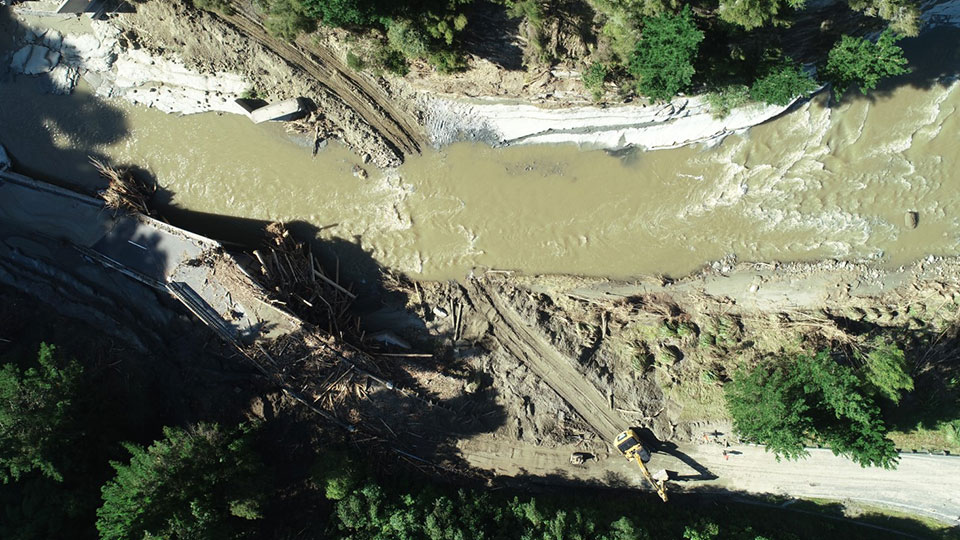
With the increasing frequency of extreme weather events and flood-related damage placing growing pressure on bridge structures, new national guidance offers robust, evidence-based practices to help critical infrastructure withstand and recover from these challenges. Bridge engineers, asset managers and decision-makers responsible for protecting public safety and maintaining essential transport links will find informed approaches to managing flood-related risks, including scour and structural vulnerability.
Developed through a review of best practice, expert consultation and analysis of recent events, the guidance provides a national framework for flood risk management tailored specifically to bridge infrastructure. It addresses both immediate operational needs during flood events and long-term resilience through better design, monitoring and maintenance.
“Bridges are vital to the functioning of our communities and economies, yet they are increasingly exposed to the impacts of flooding from extreme weather events,” said Ross Guppy, Austroads’ Transport Infrastructure Program Manager. “This guidance supports consistent, risk-based decisions to protect these critical assets and the people who rely on them.”
The document places strong emphasis on pre-flood preparation. It recommends regular scour risk assessments, structured condition inspections and prioritisation of high-risk bridges, particularly those that serve emergency services, hospitals and freight routes. This allows infrastructure managers to allocate resources efficiently and implement protective measures before damage occurs.
During flood events, the guidance supports informed operational decisions using real-time monitoring of water levels, flow rates and structural responses. By clearly defining operational thresholds and closure criteria, the framework enables safe, coordinated responses that balance the need to maintain connectivity with the imperative to protect public safety.
Post-flood recovery procedures are also covered in detail. Recommendations include thorough condition assessments, load testing, and, where required, the use of temporary load restrictions. Reopening decisions are supported by defined criteria that take into account structural integrity, traffic loads and the success of any emergency mitigation measures implemented during the event.
“This is a practical, forward-looking tool for agencies responsible for managing flood risks affecting bridges,” Ross said. “It draws on national and international insights to offer solutions that can be adapted to local conditions, technologies and resourcing levels.”
To support long-term resilience, the guidance encourages the integration of scour monitoring into routine inspection programs, particularly in flood-prone or high-flow areas. It also outlines engineering design considerations such as increased foundation depths and scour protection upgrades to reduce vulnerability over time.
The document recommends a risk-based approach to maintenance, helping agencies prioritise upgrades for critical infrastructure. In regions with known scour risks, it advises establishing protocols for temporary scour mitigation measures such as rapid riprap installation or temporary shoring. Adding an important layer of resilience, these protocols ensure emergency materials and trained response teams are available for quick deployment, especially for bridges serving critical functions or at high risk of erosion.
The guidance calls for consistent decision-making across jurisdictions through improved interagency collaboration and data sharing. A centralised platform for hydrological data, bridge performance and flood forecasts would enable better planning, resource allocation and a quicker, coordinated response to emergencies.
“Designed as a living document, the guidance will continue to evolve as new technologies, research and stakeholder feedback emerge, ensuring it remains relevant to changing climate conditions and infrastructure demands,” concluded Ross.
Download the Austroads Guideline for Flood Response and Recovery for Bridges
In conjunction with the new guidance on flood response and recovery for bridges, Austroads has also released an update to its Guide to Bridge Technology Part 8: Hydraulic Design of Waterway Structures. This latest edition incorporates updated design-related knowledge and guidance on hydrology and hydraulics, aligned with the release of Australian Rainfall and Runoff: A Guide to Flood Estimation.
Join the webinar
Monday, 8 December 2025 at 1:00 PM AEDT | Presented by Nigel Powers and Colum McGovern.
No charge but registration is essential. Can't make the live session? Register and we'll send you a link to the recording.